Introduction
Spinal cord stimulation cases represent some of the most complex and highest-value expert disputes in Nevada personal injury and medical malpractice litigation. The economics are significant: published estimates of spinal cord stimulator-related costs vary considerably — with total expenditures often ranging from approximately $34,000 to more than $123,000 depending on the device system, implantation setting, revisions, complications, and long-term follow-up — and when battery replacements, programming visits, revision surgery probability, and long-term device management costs are projected over the life expectancy of a younger plaintiff, the future care component alone can exceed $500,000. In CRPS and post-laminectomy syndrome cases, SCS is often the cornerstone of the entire damages projection — making the expert's necessity and future care opinions among the most important clinical documents in the case.
Nevada's legal landscape adds procedural complexity. Personal injury SCS cases in Clark County (Las Vegas) and Washoe County (Reno) generate intensive expert dispute as both plaintiff and defense bar bring increasingly sophisticated knowledge of SCS clinical standards to deposition and trial. Nevada medical malpractice cases under NRS Chapter 41A impose specific expert qualification requirements that affect how SCS standard-of-care opinions must be structured and attributed. And Nevada's modified comparative fault system under NRS 41.141 — barring recovery if the plaintiff's comparative fault exceeds 50% — creates strategic considerations that interact with causation analysis in SCS cases arising from accidents where pre-existing spine pathology is significant.
This article is a practical guide for Nevada plaintiff and defense attorneys on every major aspect of SCS expert opinion strategy — from the clinical frameworks governing necessity and standard of care, through the specific vulnerabilities in trial documentation and psychological evaluation, to the future care projection considerations that most affect the damages outcome.
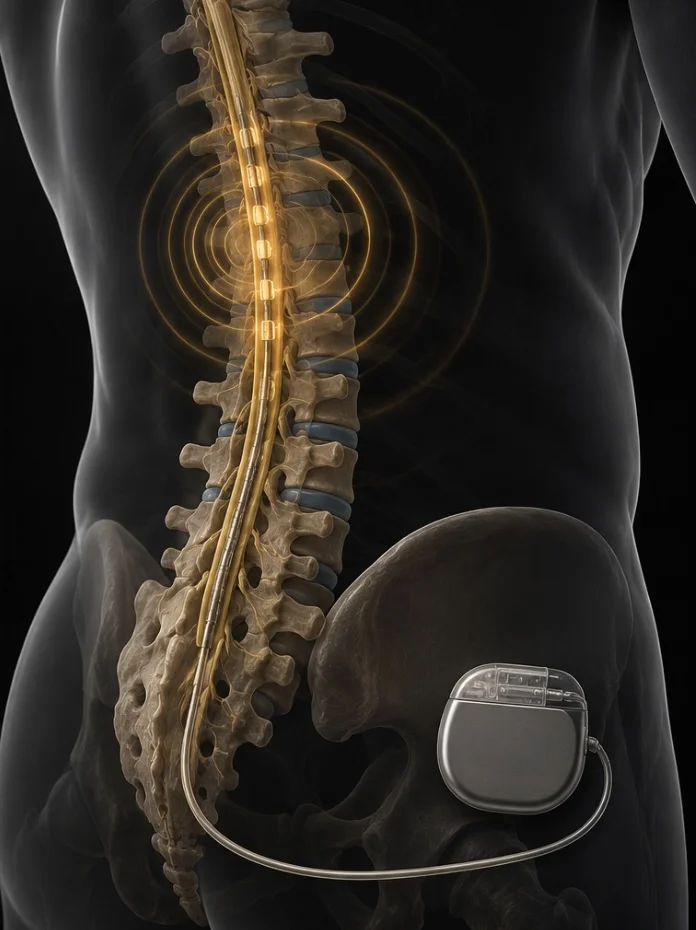
Nevada Litigation Framework — Key Statutes for SCS Cases
- NRS 41.141 (Modified Comparative Fault): Bars recovery if the plaintiff's comparative fault exceeds 50%. In SCS cases involving significant pre-existing spine pathology, the causation analysis must clinically separate accident-attributable injury from pre-existing degeneration — a two-part analysis the pain management expert must address before the defense frames it for the jury.
- NRS 41A.035 (Non-Economic Damages Cap): Caps non-economic damages at $350,000 in Nevada medical malpractice cases. Economic damages — including all projected future SCS management costs — are not capped, making future care projections the primary damages driver in SCS malpractice cases.
- NRS 41A.100 (Standard-of-Care Standard): Requires proof by preponderance that the healthcare provider failed to meet the accepted standard of care, supported by qualified expert testimony. The standard for SCS procedures is set by NANS, ISIS/SIS, and ASRA guidelines — not by Nevada-specific protocols.
- NRS 50.275 (Expert Qualification): Nevada expert witnesses are qualified by knowledge, skill, experience, training, or education — not by state licensure. A California-based board-certified pain management physician with active SCS implant practice qualifies to testify in Nevada SCS personal injury and malpractice cases.
Why SCS Cases Generate Litigation
SCS cases generate litigation in Nevada for several distinct reasons that often overlap in a single case file. In personal injury cases, SCS arises as a damages issue — the plaintiff either received SCS as treatment for accident-related spinal or neuropathic injury and seeks reimbursement for those costs, or the plaintiff requires SCS in the future and seeks to recover the projected cost. In both scenarios, the financial stakes of SCS make it the primary target for defense expert challenge: even a successful challenge to a single battery replacement projection, or a successful argument that the SCS trial was not adequately documented, can significantly reduce the damages exposure.
In Nevada medical malpractice cases, SCS generates litigation when the implantation procedure or the post-implant management falls below the standard of care and results in a worsened outcome. Lead migration that was not promptly recognized and revised, infection that was inadequately surveilled and managed, or neurological injury from lead placement are the most common malpractice triggers. Overtreatment claims — where the allegation is that SCS was performed on a patient who did not meet necessity criteria — arise less frequently in Nevada but generate necessity-focused expert disputes when they do.
Insurance coverage disputes over SCS generate a third category of Nevada SCS cases — where the payer has denied authorization for the implant procedure and the patient seeks coverage through dispute resolution or litigation. These disputes turn almost entirely on the medical necessity question: whether the clinical record establishes the recognized indication, conservative treatment failure, psychological evaluation, and trial documentation required by the payer's coverage criteria. A pain management expert who can evaluate and defend those necessity elements against the payer's medical reviewer is the key resource in this context.
Nevada Personal Injury Context
Nevada personal injury cases involving SCS arise most commonly from motor vehicle accidents on US-95, I-15, I-80, and the Las Vegas Strip corridor — accidents that produce cervical and lumbar spinal trauma with radicular pain, spinal cord injury, or the nerve injury conditions that develop into CRPS or persistent post-surgical pain requiring neuromodulation. Clark County generates the highest volume of Nevada SCS personal injury cases, reflecting the concentration of high-traffic accident corridors and the large population base in the Las Vegas metropolitan area.
Nevada's modified comparative fault system under NRS 41.141 allows fault apportionment but bars recovery if the plaintiff's comparative fault exceeds 50%. In SCS cases arising from motor vehicle accidents where the plaintiff had pre-existing spine pathology, the defense may attempt to argue that a portion of the SCS necessity is attributable to pre-existing degeneration rather than accident-caused injury — an argument that blends causation and necessity in a way that can confuse jurors if not analytically separated by the plaintiff's expert. The correct framing is a two-part analysis: what existed before the accident (pre-existing condition), and what the accident caused or accelerated (compensable injury) — with the SCS necessity traced to the compensable component.
Nevada Medical Malpractice Context
Nevada medical malpractice claims involving SCS are governed by NRS Chapter 41A. The statute requires expert testimony establishing the applicable standard of care, the defendant's departure, and the causal relationship between the departure and the claimed damages. For SCS malpractice cases, counsel should evaluate whether the proposed expert satisfies Nevada's statutory qualification requirements and has training or experience sufficient to address the particular SCS issues presented, including candidacy, trial conduct, implantation, or post-implant management as applicable. The standard of care analysis for SCS procedures is informed by NANS guidelines, ISIS evidence-based recommendations, and ASRA position statements, not by Nevada-specific protocols.
Under NRS 41A.071, a Nevada action for professional negligence generally must be filed with an affidavit from a medical expert who practices or has practiced in an area substantially similar to the type of practice at issue. The affidavit must support the allegations and identify the alleged negligent conduct as required by the statute. However, Nevada courts apply the substantive standard-of-care expert testimony requirement at trial, and without a qualified expert opinion, a malpractice claim cannot survive summary judgment or be presented to the jury. Retaining a qualified SCS-experienced pain management expert early in the case development phase is essential for Nevada malpractice plaintiffs in SCS cases.
Nevada malpractice damages are subject to the statutory cap on non-economic damages at $350,000 per NRS 41A.035 — but economic damages, including future medical care costs for SCS management, are not capped. In SCS malpractice cases where the departure resulted in a need for system revision, explantation, or a prolonged recovery requiring additional pain management, the future economic damages component can substantially exceed the non-economic cap and represent the primary damages driver.
Role of the Pain Management Expert
The pain management expert in Nevada SCS litigation performs a multi-layered clinical evaluation that spans necessity, standard of care, causation, and future care — often in a single engagement. For medical necessity review, the expert systematically evaluates the pre-implant record for each of the four required SCS candidacy elements and provides a specific opinion on whether the documentation is sufficient to support each. For standard of care cases, the expert identifies the specific guideline provisions applicable to each phase of the SCS process at issue and evaluates whether the defendant's conduct conformed to or departed from those provisions.
For causation analysis, the expert traces the clinical pathway from the accident through the injury that necessitated SCS — establishing the mechanism, the pre-accident baseline, and the post-accident clinical trajectory that led to SCS candidacy. For future care, the expert builds a device-specific projection grounded in the actual implanted system, published longevity data, and the plaintiff's documented clinical trajectory rather than from a generic neuromodulation cost template.
The pain management expert's qualifications matter specifically in Nevada SCS cases because SCS implantation requires specialist training — a board-certified pain management physician who actively implants SCS systems has firsthand knowledge of trial conduct parameters, lead placement technique, programming optimization, and complication patterns that a physician who has not performed SCS implantation cannot replicate from records review alone. At deposition, an opposing expert with active SCS implant experience will expose the limitations of a non-implanting reviewer through procedure-specific cross-examination that a records-review-only expert cannot credibly answer.
Medical Necessity Analysis
SCS medical necessity analysis in Nevada personal injury and malpractice cases evaluates four pre-implant elements that each require documentation in the treating record: (1) a recognized SCS indication — post-laminectomy syndrome, CRPS, or refractory neuropathic pain with objective support; (2) documented failure of conservative and interventional management at appropriate doses and durations; (3) a pre-implant psychological evaluation by a licensed psychologist using validated instruments; and (4) a successful SCS trial with documented baseline scores, serial pain assessments, and functional outcome measures. For a detailed clinical framework covering each element, the threshold criteria, and the specific documentation vulnerabilities most frequently targeted by defense experts, see the article on how pain management experts evaluate SCS medical necessity.
In Nevada SCS cases, each undocumented element creates an independent challenge point at deposition. A gap in any one of the four elements — even when the expert's overall necessity conclusion is supportable — gives defense counsel a specific line of cross-examination that will be pursued at deposition and amplified at trial.
Standard of Care Analysis
SCS standard of care analysis in Nevada malpractice cases addresses whether each phase of the SCS process was performed in conformity with the standard that a reasonably competent pain management specialist would observe. The phases at which standard-of-care departures most commonly arise in Nevada SCS cases are: candidacy evaluation (was the patient appropriate for SCS given the clinical and psychological picture?), trial conduct (was the trial performed with adequate technique, monitoring, and documentation?), permanent implantation (was the implant procedure technically appropriate?), and post-operative management (was the patient followed with appropriate frequency, were complications recognized and managed promptly?).
The standard of care for SCS is defined by NANS (North American Neuromodulation Society) guidelines, ISIS (International Spine Intervention Society) evidence-based recommendations, and ASRA (American Society of Regional Anesthesia and Pain Medicine) position statements. These documents establish the clinical framework that a Nevada SCS expert must apply in evaluating whether the defendant's conduct met the standard. An expert who can cite the specific guideline provision applicable to each alleged departure — rather than offering a generalized opinion that the care was substandard — provides the most effective standard-of-care testimony in Nevada SCS malpractice cases.
Causation Analysis
In Nevada SCS personal injury cases, causation analysis operates at multiple levels. The primary causation question is whether the accident caused or aggravated the pain condition for which SCS was required. For post-laminectomy syndrome cases, this requires establishing the full chain: the accident caused spinal injury; the spinal injury required surgery; the surgery produced persistent post-surgical pain; and the post-surgical pain failed to respond to conservative management — establishing the clinical necessity for SCS. Each link in this chain requires independent clinical support, and a defense expert who successfully attacks any link undermines the compensability of all downstream SCS costs.
Nevada follows the aggravation doctrine and the eggshell plaintiff rule, which allows recovery for the full extent of injury caused by the defendant's negligence even when a pre-existing condition made the injury more severe. In SCS cases involving plaintiffs with pre-existing degenerative spine disease, the causation expert must specifically address the pre-accident baseline condition and the post-accident worsening — distinguishing compensable aggravation from natural progression of the pre-existing condition. This distinction is the most frequently contested causation issue in Nevada SCS personal injury cases.
For Nevada SCS malpractice cases, causation addresses whether the defendant's departure from the standard of care caused the claimed injury — not simply that the departure occurred and the injury followed. In lead migration cases, for example, the expert must explain the clinical mechanism by which the defendant's failure to recognize and respond to lead migration within the standard-of-care timeframe caused the specific neurological or pain outcome the plaintiff suffered. Post-hoc causation assertions that simply correlate the departure with the injury without explaining the mechanism are vulnerable to challenge at the expert testimony level.
CRPS Cases
Nevada SCS cases involving CRPS are the highest-value and most complex in the Nevada personal injury market. CRPS cases involving SCS require the expert to address three separate analytical layers: causation of CRPS (did the accident cause CRPS?), necessity of SCS for the CRPS condition (does this patient's CRPS warrant SCS?), and future care projection for combined CRPS and SCS management. Each layer is independently subject to expert challenge, and the cumulative damages in a Nevada CRPS SCS case — when future care is projected over a multi-decade horizon — can reach seven figures in complex cases involving younger plaintiffs. The broader Nevada guide explains when attorneys retain pain management expert witnesses in Nevada for these overlapping issues.
Causation of CRPS requires the expert to confirm that the Budapest Criteria were met based on the contemporaneous clinical documentation — not simply that the treating physician labeled the diagnosis CRPS — and that the mechanism of injury was clinically sufficient to cause CRPS. The Budapest Criteria require two or more signs in two or more categories (sensory, vasomotor, sudomotor/edema, motor/trophic) documented at examination, and two or more symptom categories (pain/allodynia, temperature asymmetry/color change, edema/sweating changes, motor/trophic changes). A treating record that documents the CRPS diagnosis without specifically recording the Budapest Criteria categories at each examination creates a documentation gap that Nevada defense experts regularly target.
SCS necessity for CRPS follows the same pre-implant framework as for other indications, with the additional consideration that CRPS trials should document not only pain reduction but also improvement in the vasomotor and sudomotor symptoms that characterize the condition — because SCS's mechanism of action in CRPS includes autonomic modulation as well as pain inhibition. An SCS trial documentation that captures only pain score improvement without addressing autonomic symptom response misses an important component of CRPS-specific trial success criteria.
Attorney Reference
CRPS Evaluation Checklist
A CRPS diagnosis is medicolegally durable only when each Budapest Criteria element is independently documented in the clinical record — not when a diagnosis label is recorded without supporting findings.
- Sensory findings documented — allodynia or hyperalgesia recorded at examination, not merely reported by the patient
- Vasomotor findings documented — temperature or skin color asymmetry recorded at examination
- Sudomotor/edema findings documented — sweating changes or edema recorded at examination
- Motor/trophic findings documented — motor weakness, tremor, dystonia, or trophic changes recorded at examination
- Budapest Criteria satisfied across categories — signs present in at least two categories at examination, and symptoms reported in at least two categories by history
- Differential diagnosis addressed — alternative diagnoses have been considered and reasonably excluded based on the clinical presentation
- Mechanism sufficiency — the injury mechanism is clinically consistent with published literature on CRPS-precipitating events
- Temporal consistency — the onset of CRPS findings is temporally consistent with the precipitating event
A treating record that documents the CRPS diagnosis without recording the Budapest Criteria findings at each category is a documentation gap that defense experts in CRPS cases consistently target.
Post-Laminectomy Syndrome Cases
Post-laminectomy syndrome is one of the most evidence-supported indications for SCS, and SCS cases arising from post-laminectomy syndrome constitute a significant portion of Nevada SCS personal injury and future care disputes. The chain-of-causation in Nevada post-laminectomy SCS cases runs from the accident through spinal surgery to persistent post-surgical axial and radicular pain — a chain that the plaintiff's pain management expert must trace with clinical specificity at each link.
In Nevada personal injury cases, the defense challenge in post-laminectomy SCS cases typically targets the surgical necessity link — arguing that the spinal surgery that preceded the SCS was not itself necessitated by the accident. If the surgery was not compensably necessary, then the post-laminectomy syndrome that developed following surgery is not compensably attributable to the accident, and the SCS required to manage that syndrome falls outside compensable damages. This chain-of-causation attack requires the plaintiff to retain not just a pain management expert for the SCS necessity question but a spine surgery expert who can support the surgical indication as accident-related.
Nevada SCS future care projections in post-laminectomy syndrome cases must address the probability of treatment escalation — specifically whether post-laminectomy patients with SCS who develop declining stimulation efficacy over time are candidates for intrathecal pump therapy as an alternative or complementary treatment. A future care projection that accounts for this clinical trajectory is more complete than one that assumes SCS will provide adequate pain management indefinitely without considering escalation probability.
SCS Candidacy and Post-Laminectomy Diagnosis Documentation
Medical records in Nevada SCS cases frequently use varied diagnostic terminology for persistent post-surgical spinal pain — the clinically and medicolegally preferred term being post-laminectomy syndrome, applicable regardless of the specific procedure type (laminectomy, discectomy, fusion, or other decompression). Pain management experts reviewing these records should evaluate whether the documented clinical picture satisfies the accepted diagnostic criteria for post-laminectomy syndrome, regardless of the specific label appearing in the treating record. Inconsistent diagnostic labeling across visits — or notes that carry the diagnostic label without supporting clinical findings — gives defense experts grounds to argue that the SCS indication was not adequately established, a vulnerability the plaintiff's expert must address proactively.
Trial Documentation Requirements
SCS trial documentation is the single most frequently targeted element in Nevada SCS necessity and standard-of-care disputes. The clinical requirements for a valid SCS trial are specific and create objective criteria against which the treating record can be measured:
- Pre-trial baseline assessment: Pain scores (NRS or VAS) and functional baseline measures must be recorded immediately before the trial begins — not at a prior office visit days or weeks earlier. A baseline recorded at the prior visit may not reflect the patient's actual pre-trial pain status, giving the defense grounds to argue that the 50% reduction threshold was not accurately measured.
- Trial duration: A minimum trial period — typically five to seven days for percutaneous trials — is required to assess sustained rather than transient response. A one-day or two-day trial that proceeds directly to permanent implantation without adequate duration assessment is a documentation vulnerability.
- Serial pain assessment: Pain scores should be recorded at multiple points during the trial, not only at the end. Serial documentation showing progressive or sustained improvement is more compelling than a single post-trial score.
- Functional outcome measures: Trial success should be assessed not only by pain score but by functional improvement — return to activities, reduced analgesic use, improved sleep quality — documented during the trial period.
- Programming parameters: The stimulation parameters used during the trial — amplitude, frequency, pulse width, lead configuration — should be documented to confirm that appropriate therapeutic stimulation was achieved and that the patient was responding to active stimulation rather than experiencing a placebo response.
Nevada plaintiff counsel should review the trial documentation against each of these criteria before retaining the expert, because a trial record that is deficient on any element may require the expert to address that gap at deposition. An expert briefed on the documentation gaps before retention can address them proactively in their opinion; an expert who discovers gaps during deposition preparation is at a strategic disadvantage.
Nevada Defense Targets in SCS Trial Documentation
- Baseline timing: Was the pre-trial pain score recorded immediately before trial onset at the implant facility — or at a prior outpatient visit days or weeks earlier?
- Threshold measurement: Was 50% reduction measured against the specific pre-trial baseline using a validated scale (NRS or VAS), with serial scores documented throughout the trial period?
- Trial duration: Was the minimum trial duration — typically five to seven days for a percutaneous trial — completed, with documentation spanning the full trial period rather than a single end-of-trial note?
- Functional outcomes: Were activity level, analgesic use, or sleep quality documented alongside pain scores — or is the record limited to a narrative note at trial close?
- Programming parameters: Were stimulation amplitude, frequency, and lead configuration documented to confirm that active therapeutic stimulation was achieved during the trial period?
Psychological Evaluation Issues
The pre-implant psychological evaluation is a standard-of-care requirement — not a best practice recommendation — for SCS candidacy. NANS guidelines require evaluation by a licensed psychologist using validated instruments (MMPI-2, Beck Depression Inventory, or equivalent) to identify contraindications that predict poor outcomes: active psychosis, untreated major depression, severe somatization, and significant secondary gain. Nevada defense experts challenge evaluations where the evaluator was a physician rather than a licensed psychologist, where validated instruments are not documented, or where identified psychological risk factors were not addressed before proceeding to trial. For a detailed analysis of psychological evaluation adequacy in SCS necessity disputes, see the article on how pain management experts evaluate SCS medical necessity.
In Nevada malpractice cases, implantation without an adequate psychological evaluation — or after an evaluation that failed to assess the NANS-specified contraindications — is a clearly documentable standard-of-care departure. The causal link between inadequate screening and a post-implant outcome complicated by undertreated psychological factors is clinically grounded in the specific contraindication the evaluation failed to identify.
Objective Evidence Review
Objective clinical evidence is the foundation of SCS necessity opinions in Nevada litigation. The most relevant categories include: electrodiagnostic studies confirming neuropathic or radicular pathophysiology consistent with the SCS indication; physical examination findings documenting allodynia, sensory loss, motor deficits, or autonomic changes (in CRPS cases); validated pain and functional assessment scores at treatment decision points; and documented clinical response to prior conservative and interventional treatment. Nevada defense experts challenge necessity opinions that rest primarily on subjective pain reports without corresponding objective documentation — electrodiagnostic confirmation of radicular pathology or MRI findings of epidural fibrosis or persistent neural compression provide the most durable objective grounding for post-laminectomy SCS indications, while autonomic testing or thermography can supplement Budapest Criteria findings in CRPS cases.
Imaging Review
Imaging review in Nevada SCS cases is most consequential at the candidacy evaluation stage — specifically whether the MRI or CT findings are consistent with the SCS indication and at the specific levels targeted by the lead placement. In post-laminectomy syndrome cases, the imaging must document findings consistent with post-surgical pathology — epidural fibrosis, persistent neural compression, adjacent segment pathology — that support the clinical diagnosis. In CRPS cases, while imaging findings are typically less specific (CRPS is primarily a clinical diagnosis), bone scan findings consistent with CRPS or MRI changes consistent with regional bone marrow edema can supplement the clinical picture.
Imaging review also matters at the lead placement level. In Nevada SCS malpractice cases involving lead migration, pre-revision imaging — typically AP and lateral fluoroscopic views or plain film spine X-rays — documents the lead position before and after migration. An expert reviewing lead migration cases must evaluate whether the post-implant imaging obtained at follow-up was adequate to detect migration and whether the timeline between migration and revision met the standard-of-care timeframe for intervention.
Nevada plaintiff counsel should ensure that all post-implant imaging — including any fluoroscopic images from lead revision procedures — is collected as part of the expert's record review in SCS malpractice cases. Missing post-implant imaging is a records gap that the expert will identify, and that the defense will use to create uncertainty about what the imaging showed and whether it was within standard-of-care parameters.
SCS Trial Success Criteria
The SCS trial success threshold is at least 50% reduction in pain from the pre-trial baseline, measured by a validated pain scale (NRS or VAS) — the criterion used by NANS and device manufacturers to define genuine trial success. Nevada defense experts challenge trial success on two fronts: methodological adequacy (was the 50% threshold measured against a valid, contemporaneously recorded pre-trial baseline, with serial assessments across the full trial duration?) and outcome durability (does the documentation distinguish sustained neuromodulation response from a transient novelty effect?). The specific documentation vulnerabilities Nevada defense experts target are itemized in the checklist above.
Trial documentation that addresses all elements in the checklist — contemporaneous baseline, serial scores, functional outcome measures, and programming parameters — is substantially more resistant to Nevada necessity challenge than a trial record supported only by a single post-trial narrative note. A pain management expert reviewing trial documentation for Nevada SCS cases should assess each element against the checklist before forming a necessity opinion on permanent implantation.
Permanent Implant Disputes
Permanent SCS implant disputes in Nevada litigation arise in two main contexts: necessity disputes where the defense argues that permanent implantation was not warranted based on the trial results or the pre-implant workup; and standard-of-care disputes where the permanent implantation procedure itself — lead placement, anchoring, pocket creation, or wound closure — is alleged to have fallen below the technical standard.
Permanent implant necessity disputes are resolved by the trial documentation framework described above. Standard-of-care disputes at the implantation stage require a more technically specific expert opinion: what does the standard require for lead placement confirmation (fluoroscopic imaging during and after placement), wound closure technique (layered closure, antibiotic irrigation), pocket creation (size appropriate for the pulse generator with no tension), and the post-operative surveillance protocol (antibiotic prophylaxis, wound check timeline, patient education regarding infection signs)?
Nevada malpractice defense in permanent implant cases often centers on whether the specific complication (lead migration, infection, neurological injury) was an inherent risk of the procedure disclosed in the informed consent, rather than a departure from the standard of care. The plaintiff's expert must be prepared to distinguish between a disclosed procedure risk that materialized (no departure) and a preventable complication that resulted from a specific technical or management failure (departure). This distinction — between risk realization and standard-of-care departure — is the central analytical question in Nevada SCS implant malpractice cases.
Complications and Adverse Events
Nevada SCS malpractice cases most commonly arise from four categories of complications: lead migration, infection, neurological injury, and hardware failure. Each generates a distinct standard-of-care analysis.
Lead migration is the most common SCS complication. The standard of care addresses lead anchoring technique at initial implantation, post-operative imaging to confirm lead position, the interval of follow-up at which migration is detectable, and the timeframe for revision once migration is identified. A malpractice claim based on lead migration requires the expert to establish not just that migration occurred — migration is a recognized complication — but that the specific anchoring technique, follow-up frequency, or revision response timeline departed from the standard.
Infection at the SCS implant site is a serious complication that in some cases requires full system explantation — with significant impact on the patient's pain management, requiring transition to alternative treatment while the infection resolves and the implant site heals before reimplantation can be considered. Infection malpractice claims examine pre-operative prophylaxis, intraoperative antibiotic irrigation, wound closure technique, post-operative wound care instructions, and the response when early infection signs were reported.
Neurological injury from SCS lead placement — including spinal cord injury, epidural hematoma, or nerve root injury — is the most severe SCS complication and generates the most complex causation analysis. The standard of care for avoiding neurological injury during SCS placement involves real-time intraoperative fluoroscopic guidance, patient positioning and sedation management that allows intraoperative communication, attention to resistance and paresthesia patterns during lead advancement, and immediate response protocols when the patient reports new or intensifying paresthesias during placement.
Hardware failure — connector failure, lead fracture, or pulse generator malfunction — generates malpractice claims when the failure is alleged to result from technical error at implantation rather than expected device wear. Hardware failure cases require review of device manufacturer data, explant analysis where available, and operative notes from the revision procedure.
Future Medical Care Considerations
Future medical care analysis for SCS in Nevada personal injury cases requires the expert to address five categories of projected cost: battery replacement, programming visits, revision surgery probability, device upgrade probability, and ancillary pain management costs associated with the underlying condition.
Battery replacement projections are the most frequently contested line item in Nevada SCS future care disputes. The replacement interval depends on whether the system is rechargeable or non-rechargeable and the patient's documented usage settings — rechargeable systems typically sustain therapeutic capacity for 7 to 10 years before battery degradation, while non-rechargeable systems vary from 2 to 5 years depending on usage. A projection that applies non-rechargeable replacement intervals to a patient with a rechargeable system overstates future battery costs and is a standard defense deposition target; a pain management expert with active SCS device management experience will not make this error.
Programming visit frequency projections must be grounded in the patient's current stimulation status and the known pattern of programming needs for the specific condition. Newly implanted patients typically require more frequent programming visits in the first year; stable long-term patients may be adequately managed with one to two visits per year. A life care plan that projects four to six programming visits per year for a stable long-term SCS patient without clinical justification for elevated frequency is a target for defense challenge.
Revision surgery probability must be grounded in published SCS revision rates for the specific system and indication. Published literature on SCS revision rates — lead migration requiring revision, hardware failure requiring replacement, infection requiring explantation — provides the epidemiological basis for revision probability projections. A future care expert who projects revision surgery without citing the specific published revision rates for the relevant system is providing a probability opinion without a methodological foundation.
In Nevada CRPS and post-laminectomy syndrome cases, the future care projection should also address the probability of treatment escalation to intrathecal drug delivery if SCS efficacy declines over time, and the costs associated with interdisciplinary pain program participation and long-term psychological support for the chronic pain condition.
IME Review
Independent medical evaluations in Nevada SCS cases add a direct examination component to the records-based opinion — particularly valuable when the plaintiff's current clinical status is contested or when the defense argues that the plaintiff's current condition does not support the future care projection. In Nevada personal injury SCS cases, a defense IME allows the examining physician to directly assess the current clinical picture, evaluate stimulation-related functional status, and form independent opinions about whether the claimed functional limitations are consistent with the physical examination findings.
In Nevada SCS malpractice cases involving neurological injury, a plaintiff IME by the plaintiff's retained expert documents the current neurological picture — identifying specific deficits, measuring their severity with validated instruments, and opining on the causal relationship between those deficits and the alleged departure. When the defense disputes the extent of neurological injury, a plaintiff expert IME that specifically documents and quantifies the neurological findings provides the factual foundation for the expert's causation and damages opinions.
Nevada plaintiff counsel should consider whether an IME adds value beyond the records-based review in each specific case. When the plaintiff's current functional status is a significant damages component — and when the defense is likely to challenge the treating record's functional documentation — a plaintiff expert IME that directly examines and documents the current clinical picture provides a more durable foundation for the functional limitations and future care opinions than a records-based review alone.
Plaintiff Arguments
Nevada plaintiff counsel in SCS personal injury cases typically advance several core arguments in support of SCS necessity and future care. First, the treating pain management specialist's clinical judgment — grounded in direct patient examination and the full treating relationship — is more reliable than a records-reviewing defense expert who never examined the patient. This argument is strongest when the treating physician is board-certified in pain medicine, documented the necessity elements clearly, and has a clinical history with the patient that a single-visit IME physician cannot replicate.
Second, plaintiff counsel argues that published specialty society guidelines support the treatment rendered — that the treating physician's approach was consistent with NANS SCS guidelines, ASRA position statements, and the published SCS indication literature. When the plaintiff's expert specifically cites the applicable guideline provision supporting each treatment decision, the defense expert's challenge must engage that specific authority rather than simply asserting that treatment was excessive.
Third, plaintiff counsel in Nevada CRPS and post-laminectomy SCS cases argues that SCS is a well-evidenced treatment with published randomized controlled trial support for the specific indication, making the future care projection for SCS an evidence-based cost that the defense cannot credibly characterize as experimental or speculative.
Defense Arguments
Nevada defense counsel in SCS personal injury cases advance several counter-arguments. First, that the SCS trial was not adequately documented to establish success — targeting the baseline timing, the assessment method, the trial duration, or the absence of functional outcome measures as evidence that the 50% threshold was not rigorously established.
Second, that the conservative treatment record is inadequate to establish treatment failure before SCS candidacy was pursued — specifically that the plaintiff did not complete an adequate course of pharmacotherapy including trials of multiple medication classes, did not complete physical therapy to documented functional endpoints, or proceeded to SCS candidacy evaluation before adequate benefit from prior interventional treatment such as ESI or RFA was assessed.
Third, that the future care projection overstates SCS costs by applying incorrect device-specific assumptions — incorrect battery replacement intervals, inflated programming visit frequency, or revision surgery probability not supported by published device outcome data. This device-specific challenge is most effective when the defense expert has active SCS device management experience and can identify specific projection errors at the technical level that a non-implanting expert would not detect.
Fourth, in Nevada cases involving significant pre-existing spine pathology, that the plaintiff's SCS need is primarily attributable to pre-existing degeneration rather than accident-caused injury — an argument that targets the causation link in the chain from accident to SCS necessity under NRS 41.141's comparative fault framework.
Common Defense Challenges in Nevada SCS Cases
- Trial documentation gaps: Baseline not recorded at the implant facility; no serial pain scores during the trial period; 50% threshold not measured against a valid pre-trial baseline; no functional outcome measures documented alongside pain scores.
- Conservative treatment insufficiency: Pharmacotherapy was incomplete across drug classes; physical therapy was not completed to documented functional endpoints; prior interventional treatment was not adequately assessed before SCS candidacy evaluation proceeded.
- Psychological evaluation adequacy: Evaluation performed by a physician rather than a licensed psychologist; validated instruments not documented; identified psychological risk factors not addressed before proceeding to trial stimulation.
- Device-specific future care errors: Non-rechargeable replacement intervals applied to a rechargeable system; programming visit frequency above what the documented clinical trajectory supports; revision probability not grounded in published device outcome data for the specific implanted system.
- Pre-existing condition causation (NRS 41.141): SCS need is primarily attributable to pre-existing degenerative disease rather than accident-caused injury — targeting the causation link before the necessity analysis, with comparative fault framing intended to reduce or eliminate the damages apportionment to the accident.
Questions Attorneys Should Ask
Before retaining a pain management expert for a Nevada SCS case, counsel should ask:
- Active SCS implant practice: Do you currently perform SCS implantation — both trial and permanent — in active clinical practice? At what volume in the past 12 months? An expert who has not personally conducted SCS trials and permanent implants in recent clinical practice cannot defend the technical specifics of trial documentation, lead placement, and device management under cross-examination by a defense expert who does.
- Device-specific knowledge: Are you familiar with the specific SCS system implanted in this plaintiff, including the device's published battery longevity data, lead configuration options, and programming parameters? Future care projections require device-specific knowledge, not just general SCS familiarity.
- CRPS experience: If the case involves CRPS, do you actively treat CRPS patients with SCS and other neuromodulation approaches? CRPS SCS cases require specific knowledge of Budapest Criteria, CRPS-specific SCS programming, and the autonomic as well as pain outcomes of SCS in CRPS.
- Guideline familiarity: Which specific NANS, ISIS, and ASRA documents govern the SCS issues in this case, and can you identify the specific provisions applicable to the necessity and standard-of-care questions at issue?
- Plaintiff and defense balance: What percentage of your expert work is plaintiff versus defense, and can you provide a prior case list? Retention bias is a standard Nevada deposition cross-examination topic.
- Nevada or regional experience: Have you provided expert testimony in Nevada courts, and are you familiar with Nevada's modified comparative fault framework and its interaction with causation analysis in pre-existing condition cases?
- IME availability: If a direct examination is needed, can you travel to Nevada or accommodate the plaintiff at a clinically appropriate facility?
Editorial Note: The opinions and considerations discussed in this article are educational and informational only. Pain management expert opinions depend on the specific medical records, imaging, testimony, treatment chronology, and facts of each case.
Conclusion
Nevada SCS litigation — whether arising from personal injury, medical malpractice, or insurance coverage disputes — requires pain management expert support that is specifically calibrated to the clinical and technical demands of spinal cord stimulation. The expert must be able to evaluate trial documentation at the specific measurement level, address psychological evaluation adequacy, trace causation through the full clinical chain, build future care projections from device-specific inputs, and defend all of these opinions under cross-examination by well-prepared opposing experts in Clark County and Washoe County courts.
The most important strategic decision Nevada attorneys make in SCS cases is the expert retention decision — specifically whether to retain a board-certified pain management physician who actively implants and manages SCS systems in clinical practice, or to rely on a records reviewer without active procedural experience. In Nevada SCS cases, where opposing counsel will have access to device-specific cross-examination tools and where the future care projections under dispute can exceed $500,000, the difference in expert quality is measured in case outcomes rather than in fees.
For Nevada plaintiff and defense attorneys handling SCS cases — in personal injury, insurance coverage, or malpractice proceedings — Dr. Dardashti is available for SCS necessity analysis, standard of care opinions, causation analysis, future care projections, IME, and deposition and trial testimony in Clark County, Washoe County, and throughout Nevada. Call 805-267-9308 to discuss your case.
Related Articles
Nevada Pain Management Expert Witnesses in Personal Injury and Medical Malpractice Cases
A practical guide for Nevada plaintiff and defense attorneys on retaining a pain management expert in Clark County, Washoe County, and statewide litigation.
Read articleTexas Chapter 74 and Pain Management Expert Witness Testimony in Personal Injury and Medical Malpractice Cases
Chapter 74 expert report requirements, qualification standards, causation, and procedure-specific disputes for Texas plaintiff and defense counsel.
Read articleMedical Necessity Disputes in Florida Personal Injury Cases
PIP statute necessity definition, Daubert standard, ESI/RFA/SCS/IDDS/PNS/CRPS disputes, and plaintiff and defense strategy for Florida statewide litigation.
Read articleHow Pain Management Experts Evaluate Medical Necessity in Personal Injury Cases
A clinical framework covering necessity criteria for ESI, MBB/RFA, SCS, IDDS, and future care projections in personal injury litigation.
Read articleHow Pain Management Experts Evaluate Causation in Personal Injury Cases
Aggravation doctrine, pre-existing degeneration, CRPS causation disputes, post-laminectomy syndrome chain-of-causation, and the causation foundation required for future care projections.
Read articleWhat Is the Difference Between Medical Necessity and Standard of Care?
How to distinguish two clinical concepts that every pain management litigation attorney must understand — with procedure-specific examples across ESI, RFA, SCS, IDDS, and PNS.
Read articleHow Pain Management Experts Evaluate Medical Necessity for Spinal Cord Stimulators
SCS trial documentation, permanent implantation criteria, psychological screening, revision disputes, battery replacement projections, and future care analysis.
Read article